Aging and its consequences are better understood now than ever before. In addition to wrinkles and creases on the face, a loss of fat and volume under the skin may cause the cheeks to appear hollow and gaunt. This volume loss may be reversed by facial fat grafting in Troy, an operation performed with distinct advantages over other options. To learn more, contact Dr. Danielle DeLuca-Pytell right away. She is a skilled plastic surgeon with years of experience who can further explain what is required for this procedure.
Autologous fat grafting, or facial fat transfer, is a treatment available in Troy in which your plastic surgeon transfers your natural fat cells from one part of your body and into your face to restore a youthful look.
Since it does not require several treatments, you are more likely to see natural-looking results with this operation as compared with temporary injectable fillers or collagen treatments. During your procedure, liposuction is performed to harvest fat from various body regions to fill wrinkles and other areas that have lost volume, thereby achieving natural fullness.
This surgery treats loss of volume in the face and hands, too. Fat grafting can help restore some of the lost volume with the body’s own tissue. It is often done in conjunction with a facelift but can be a stand-alone procedure. While surgeons often use fat grafting for facial rejuvenation, fat can be transplanted to other areas of the body as a corrective procedure (such as for contour irregularities after breast procedures or liposuction).
Your natural fat cells are extracted with a gentle liposuction technique. They are then prepared for injection by gravity or centrifugation. This process removes oils and serum and allows just the intact fat to be transferred. The fat is then placed into the areas of volume loss through tiny entrance sites. Some overcorrection is performed in anticipation of reabsorption of the fat. It is expected that only 30% of the fat will “take” and become vascularized and act like the other fat naturally found in the face.
The optimal places on your body to harvest your natural fat cells should be discussed with your surgeon during a consultation, but fat is often taken from the tummy, hips, thighs, or buttocks. When it is time for surgery, we will perform a local anesthetic to minimize pain, after which your fat cells are purified and then carefully injected into areas of your face where you wish to smooth wrinkles and creases or enhance the contouring.
The fat grafting will take 1-2 hours as a standalone procedure. As with any surgical procedure, there is a period of recovery following a facial fat transfer. Swelling, bruising, and soreness may occur for a few weeks, but these symptoms should go away within a few months.
Your volume-enhancing outcomes will surface when the edema and adverse effects diminish. You are unlikely to need any further appointments to maintain your results. After undergoing facial fat transfer, your face will continue to age normally.
Facial fat grafting operations in Troy use a small number of fat cells from donor sites on your body, such as the buttocks, abdomen, thighs, and back, to reshape your face, add volume, and tighten your skin—all at once.
Because your body reabsorbs and processes some fat cells, more of them will be harvested and transplanted than necessary. When your recovery is complete (which is usually about 3 to 4 months), the cells that have survived the transfer remain in their new place indefinitely. With this method, the most crucial stage is processing the fat cells for transfer.
Facial fat injections in Troy may reduce the effects of aging and restore a more youthful appearance. They work wonders on wrinkles and fine lines, as well as on hollowed cheeks, uneven skin tone, and a sagging chin. Using your natural fat cells for this operation also decreases the risk of an allergic response, infection, or other problems associated with introducing a foreign substance into your body.
As a filling material, there is often a plentiful supply of fat. What is transplanted and vascularized after absorption is expected to remain. However, the amount of fat which takes after grafting is approximately 30%, so additional filling to maintain correction with “boxed” fillers may be needed.
All surgery carries risk. We recommend patients carefully weigh the benefits of having surgery against the potential risks which may arise. Risks include pain, bleeding, infection, damage to nearby structures, need for other procedures, recurrence of skin laxity, dissatisfaction with appearance, asymmetry, seroma, sensory changes including permanent loss of sensation, temporary or permanent changes in facial movement, wound healing delays requiring wound care, deep vein thrombosis, and pulmonary embolus. A complete list of risks will be discussed with you before surgery.
Not every patient is an ideal candidate for autologous fat grafting. Some patients may not have sufficient donor fat available, while others may prefer to avoid the additional recovery associated with a liposuction harvest site. For these patients, off-the-shelf volume replacement products offer a meaningful alternative worth discussing during your consultation in Troy.
Two options Dr. DeLuca-Pytell may discuss with you are Renuva and Alloclae.
Renuva is an injectable off-the-shelf adipose matrix derived from donated human tissue. It works by providing a scaffold into which your body’s own fat cells can migrate and populate over time, effectively generating new volume in the treated area without requiring a harvest procedure. Because no liposuction is involved, the procedural burden is lower, and the recovery is generally more straightforward. The result is a gradual, natural-looking restoration of volume that develops over several weeks following injection rather than appearing immediately, which many patients find gives the outcome a more believable, organic quality.
Alloclae is a processed human adipose tissue that maintains the structural support of fat, including collagen and the extracellular matrix. In the context of facial volume restoration, it can be used to add structure and support to areas that have lost significant tissue over time. Like Renuva, it eliminates the need for a donor harvest site, making it a practical consideration for patients who are not surgical candidates or who want a less involved path to volume correction.
Both options offer Troy patients who are not candidates for traditional autologous fat grafting a meaningful path to facial volume restoration. They also represent a lower procedural commitment overall, which makes them worth exploring even for patients who might otherwise qualify for a standard fat transfer but have reservations about the full surgical process. Dr. DeLuca-Pytell will walk you through how each option works, what realistic outcomes look like, and whether your anatomy and goals make one a better fit than the other.
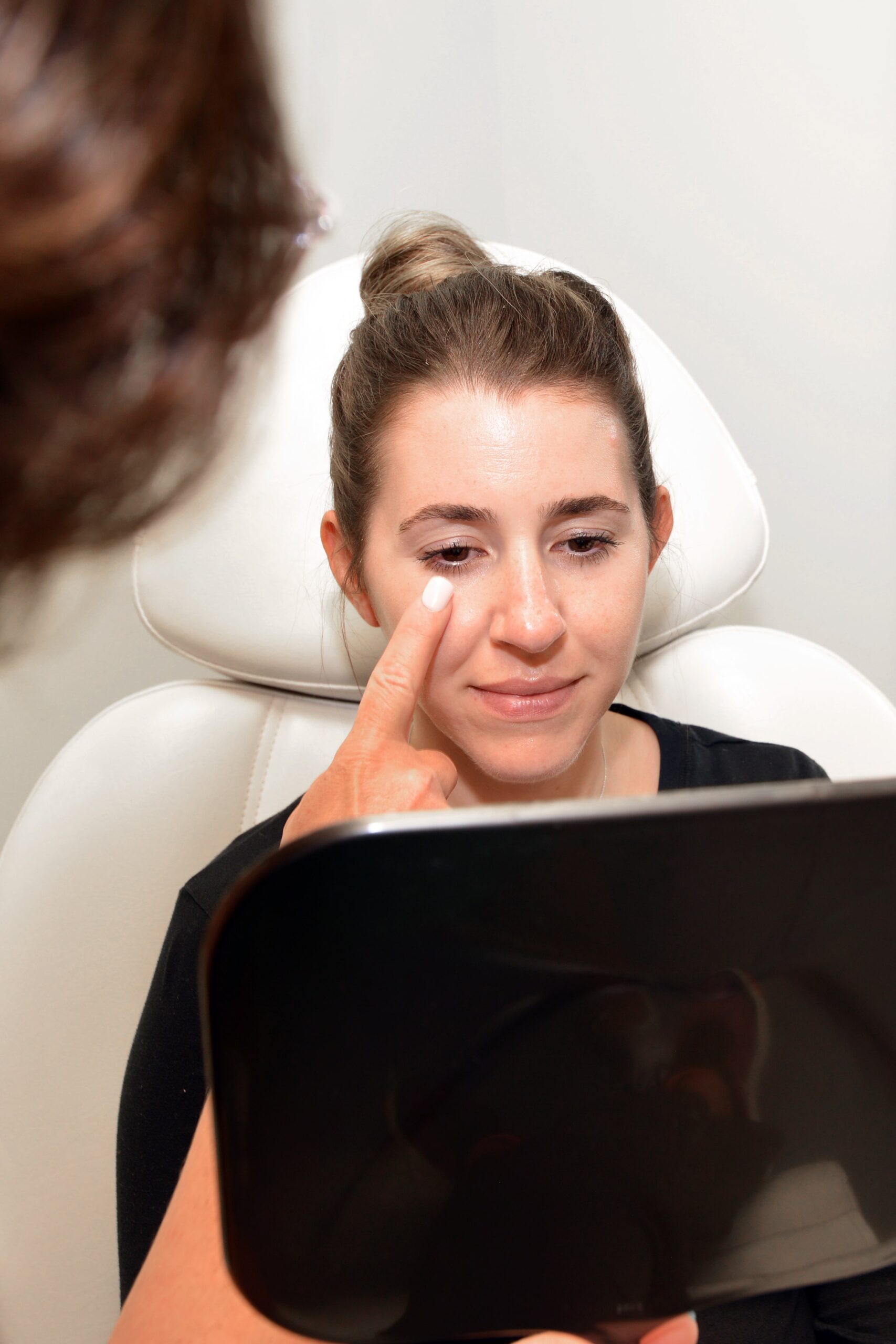
No two patients approach facial fat grafting with the same concerns, the same anatomy, or the same goals, and that variation is exactly why the consultation matters as much as the procedure itself. Dr. DeLuca-Pytell takes a thorough, unhurried approach to every initial appointment, assessing the degree of volume loss, the quality of your skin, and the areas most affecting your overall appearance before making any recommendations.
For Troy patients considering facial fat grafting or an off-the-shelf alternative, that conversation is where the right path forward becomes clear. She will also discuss realistic expectations around timing, since results from both autologous grafting and products like Renuva develop gradually, meaning the final outcome is best evaluated several weeks after treatment, not immediately following the procedure.
If you are tired of ineffective anti-aging and wrinkle-reduction treatments, we would love to give you a more long-term solution. Undergoing facial fat grafting in Troy can bring new levels of self-esteem and happiness. Fat grafting can be combined with other facial or body surgeries, or performed on its own, to restore volume. If you are considering pursuing fat grafting, be sure to do so with an experienced, understanding surgeon. Dr. DeLuca-Pytell can help you determine whether this is the right surgery for your unique needs and goals. Call us today to set up an appointment and talk to one of our experts.
Reach out to our Troy office today to schedule your consultation and take the first step toward a more youthful, naturally refreshed appearance.